Apprenticeship funding and levy reforms will come into effect from 1 August 2026, bringing important changes to how employers use, manage and plan apprenticeship investment.
For the energy and utilities sector, these reforms come at a critical time. Employers are already planning for significant workforce demand, changing skills needs and the need to attract, develop and retain talent across essential infrastructure roles. Against this backdrop, the effective use of apprenticeship funding will be an important part of supporting long-term workforce resilience.
The latest 2026 to 2027 apprenticeship funding rules apply to apprenticeships starting between 1 August 2026 and 31 July 2027, and apply to employers, employer-providers and main providers. Employers should refer to the full GOV.UK guidance for the detailed funding rules.
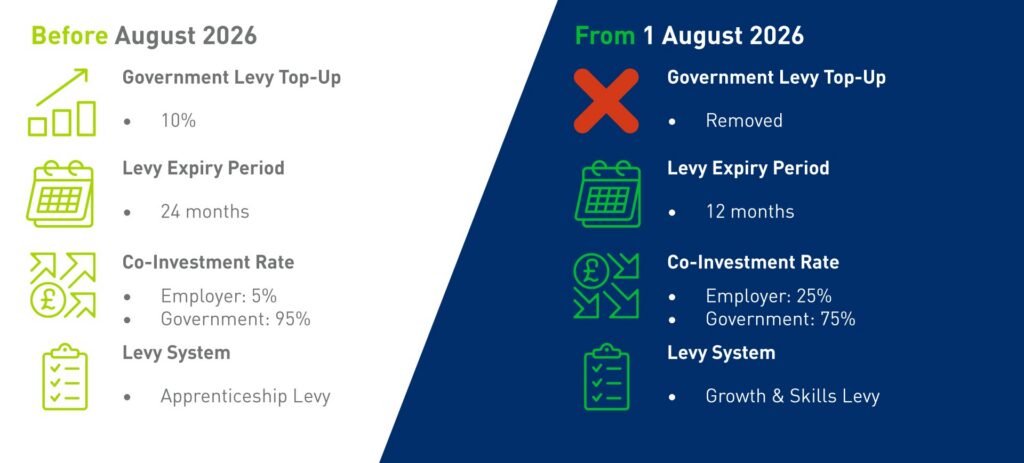
What this could mean for employers
The reforms are likely to place greater emphasis on strategic levy management and forward planning. For levy-paying employers, the removal of the 10% government top-up, shorter levy expiry window and expected increase in co-investment once funds have been used could mean less flexibility and a greater need to plan apprenticeship investment earlier.
This makes it important for employers to review current and future levy usage, understand upcoming apprenticeship starts, and consider where funding can have the greatest impact. Apprenticeship planning should be closely linked to wider workforce planning, including future skills demand, business priorities, supply chain capability and long-term workforce needs. Where employers are unable to use all of their levy funding directly, levy transfer may also have a role to play in supporting apprenticeship opportunities across the supply chain or wider sector. Energy & Utility Skills Group has recently supported work with Baltic Apprenticeships and The Clancy Group, demonstrating how levy transfer can form part of a more strategic approach to workforce investment.
Looking ahead: a sector-wide opportunity
The transition to the Growth and Skills Levy also signals a broader focus on approved skills training, including apprenticeships, apprenticeship units and foundation apprenticeships.
For the energy and utilities sector, this presents an opportunity to think more strategically about how apprenticeship funding can support priority skills areas, including digital, data, AI, operational skills, engineering and technical capability.
As employers respond to new technologies, infrastructure investment, net zero ambitions and changing customer expectations, apprenticeship and skills investment will play an important role in building the workforce needed for the future.
The reforms should therefore be viewed not only as a change to funding rules, but as a prompt for employers to consider how apprenticeship investment can support future workforce demand and wider sector resilience.
For employers, this means asking:
- Are we making full use of our levy funding?
- Do our apprenticeship plans reflect future workforce needs?
- Where are our current and emerging skills gaps?
- Could collaboration or levy transfer support wider sector capability?
- How can apprenticeship investment support long-term workforce resilience?
For the sector, the reforms highlight the importance of collaboration. By planning ahead, sharing insight and using funding mechanisms effectively, employers can strengthen apprenticeship pathways and support the development of the skills needed for the years ahead.
Rachel Thomas, Managing Director, Energy & Environment Awards, part of the Energy & Utility Skills Group said:
“The upcoming apprenticeship funding reforms underline the importance of strategic and collaborative workforce planning across our sector. As employers respond to changing skills needs, effective use of levy funding, including levy transfer where appropriate, can help ensure investment is directed where it can have the greatest impact. By working together, we can support the development of the skills, capability and talent needed for the future of the energy and utilities workforce.”
How Energy & Utility Skills Group can support
As apprenticeship funding reforms come into effect, Energy & Utility Skills Group can help employers consider what the changes could mean for their organisation and how apprenticeship investment can be aligned with future workforce priorities.
This includes supporting conversations around:
- understanding the implications of the upcoming apprenticeship funding changes
- reviewing current and future workforce needs, including priority skills gaps
- considering how apprenticeship programmes can support long-term workforce planning
- exploring how levy funding, including levy transfer where relevant, could support organisational and wider sector skills needs
- connecting employers with relevant sector activity, partners and resources
Through our work with employers, the Energy & Utility Skills Partnership and wider sector networks, we can help organisations consider how apprenticeship investment can support both business priorities and the future capability needs of the energy and utilities workforce.
Stephen Barrett, Director of Membership & Strategic Engagement, Energy & Utility Skills Group, said:
“Our role is to help employers make sense of what these reforms mean in practice, from workforce planning and apprenticeship strategy through to identifying where collaboration or levy transfer may add value. The key is making sure apprenticeship investment is planned early and aligned to the skills employers and the wider sector will need in the years ahead.”
For further information or to speak to the team, please contact collaborate@euskills.co.uk.