
Member CEO Update: Advancing the sector's workforce and skills priorities
Member CEO Update: October 2026
October has seen significant progress in turning the workforce priorities agreed by members through the Skills Strategy 2025-2030 into clear policy positions, political engagement and practical action.
For energy, water, waste and critical infrastructure, the central challenge remains the same: ambitions for growth, investment and infrastructure delivery must be matched by the workforce capacity, competence and skills needed to achieve them safely and sustainably.
This month’s update covers our work on critical workforce and migration, apprenticeship reform and Wales’s energy ambitions, alongside an upcoming webinar launching our Workforce Demand Estimates 2026-2032.
Read alongside the Energy & Utility Skills Partnership CEO Council priorities, it demonstrates how our shared framework across Research, Attract, Develop and Retain is being converted into evidence, influence and action on behalf of members.

Critical Workforce and Migration
Energy & Utility Skills Group will submit evidence to the Home Affairs Committee’s inquiry into work-based migration and labour shortages, making the case that workforce development and migration policy must work hand in hand. The submission will build on the discussion and decisions from the Energy & Utility Skills Partnership (EUSP) CEO Council meeting on 7 October.
The EUSP CEO Council has also agreed that the sector should take a more coordinated approach to workforce planning, migration and skills delivery, with future work progressing through a dedicated Delivery Board workstream.
Delivering the UK’s energy, water and wider infrastructure ambitions depends on access to the right people, with the right skills, at the right time. As investment accelerates through major programmes and regulatory cycles, employers are facing increasing competition for critical occupations, particularly in technical, engineering and safety-critical roles. While industry continues to invest significantly in apprenticeships, qualifications, routes to competence and workforce development, many roles require years of training and practical experience before individuals can work independently and safely.
Our evidence to the Committee will make clear that restricting access to international talent does not automatically create domestic capability where skills, experience or training capacity do not yet exist at sufficient scale. Domestic workforce development must remain the long-term priority, but targeted and proportionate migration should complement sustained investment in UK recruitment, apprenticeships, retraining, progression and retention where employers can demonstrate genuine workforce need.
The Delivery Board workstream will focus on strengthening employer-led workforce evidence, supporting long-term domestic capability and ensuring policymakers understand where workforce constraints could affect the UK’s energy transition and infrastructure priorities. Through the Research, Attract, Develop and Retain pillars of the Skills Strategy 2025-2030, the objective is to build sustainable workforce solutions while ensuring skills shortages do not become barriers to investment, competence, safety or delivery.
Members with evidence or case studies that could strengthen this work are invited to contact collaborate@euskills.co.uk.

Apprenticeship Reform: Protecting Opportunity, Investment and Competence
Following the Energy & Utility Skills Partnership (EUSP) CEO Council’s decision in June to prioritise apprenticeship reform and policy engagement in Year Two of the Skills Strategy 2025-2030, Energy & Utility Skills Group has taken an employer-led position directly into the national policy debate. This has included a submission to the All-Party Parliamentary Group (APPG) on Apprenticeships inquiry, direct engagement with APPG representatives and a letter to its Chair, Toby Perkins MP, backed by more than 60 organisations across the Partnership and wider sector.
Apprenticeships are central to the sector’s ability to build workforce capacity, improve productivity and create routes into skilled employment. However, employers continue to experience challenges in how apprenticeship funding is allocated and accessed, how the four UK skills systems interact, and how reform can introduce greater flexibility without weakening occupational competence or independent assurance.
Our position is clear: reform should widen access, respond to future workforce requirements and improve the use of apprenticeship investment, while retaining employer leadership and protecting the competence required in safety-critical occupations.
We advanced that position through our submission to the All-Party Parliamentary Group on Apprenticeships inquiry in July. This was followed by two meetings with APPG representatives, most recently on 24 September, as well as the letter to Toby Perkins MP. Together, we set out three priorities: fairer apprenticeship investment across the UK; a more connected, employer-led skills system; and reform that protects future competence, quality and safety.
We expect the APPG to announce its recommendations in November. We will assess its recommendations against the positions agreed by employers and continue to make the case for a system that turns investment into sustainable workforce capability.

Wales: Connecting Energy Ambition with Workforce Delivery
Energy & Utility Skills Group has written to the Welsh Government about its proposal to consolidate publicly owned energy interests and is now developing a full consultation response on behalf of members. Our position is that workforce planning, competence and skills development must be embedded from the outset if this investment is to create high-quality employment, stronger Welsh supply chains and enduring workforce capability.
Our Director of Membership and Strategic Engagement, Stephen Barrett, represented the Group at the Plaid Cymru Conference this month. Discussions with policymakers and stakeholders, including Cefin Campbell MS, explored the relationship between energy ambition, productivity, skills and regional growth. The message from those discussions was clear: Wales has an opportunity to align infrastructure investment more closely with employer demand and workforce planning, while ensuring competence and safety remain central to delivery.
Our subsequent letter to the Welsh Government sets out how the programme could maximise its economic and social impact. Our recommendations include aligning project pipelines with workforce demand, strengthening local skills and supply-chain capacity, creating clearer entry and progression routes, and enabling skills to transfer from adjacent sectors.
Our full consultation response will ensure the practical workforce consequences of the proposal are understood before delivery structures become fixed. The objective is to ensure investment in energy assets is matched by investment in the people required to design, build, operate and maintain them.

Looking Ahead: Workforce Demand Estimates 2026-2032
On 4 November, we will launch our Workforce Demand Estimates 2026–2032 through a webinar in collaboration with Utility Week. The session will examine what the evidence means for employers and policymakers, and how it can support the workforce decisions needed to deliver the UK’s infrastructure ambitions.
The new research will comprise seven reports, with workforce demand analysed by industry, occupation, nation and English region. It will provide a stronger evidence base for understanding where demand is growing, where capability pressures may emerge and what action will be required to prevent workforce constraints from becoming barriers to delivery.
Its value lies not simply in quantifying demand, but in enabling better decisions on workforce planning, recruitment, apprenticeships, training, succession and investment. By looking ahead to future capability requirements, employers and policymakers can move from reacting to workforce pressures to anticipating and addressing them.
Member CEO Update: July 2026
July has brought a new Government, new ministerial leadership and significant activity against the workforce priorities agreed by members through the Skills Strategy 2025-2030.
For energy, water, waste and critical infrastructure, this creates an important opportunity to ensure workforce needs are understood early by key decision makers and reflected in national policy, investment and delivery.
This update brings together activity across government engagement, technical education, apprenticeships, migration, Sector Entry, workforce planning and member investment.
Read alongside the Energy & Utility Skills Partnership (EUSP) CEO Council priorities, it shows how our shared framework across Research, Attract, Develop and Retain is being converted into evidence, influence, action and practical value for members.

Reporting Progress Against the Skills Strategy
Members can review the latest quarterly Skills Strategy 2025-2030 update, which tracks progress against agreed priorities and highlights current activity supporting workforce development across the sector. The update provides a clear line of sight between the priorities agreed through the EUSP CEO Council and the action now being taken to support long-term skills, workforce capability and delivery across energy, water, waste and critical infrastructure.

Influencing the new Government
Following the formation of the new Government, early engagement is focused on ensuring sector priorities are understood by the departments and ministers whose decisions will shape workforce policy, infrastructure delivery, skills investment and economic growth. Each letter reflects priorities approved by the EUSP CEO Council and sets out a specific departmental ask, maintaining a consistent, member-led position across energy, environment, business, education and skills.
- Letter to DBIST Secretary of State – Tuesday 28 July 2026
- Letter to DEFRA Secretary of State – Tuesday 28 July 2026
- Letter to DESNZ Secretary of State – Tuesday 28 July 2026
- Letter to DfE Secretary of State – Tuesday 28 July 2026
- Ministerial Letter – Skills Minister Baroness Jacqui Smith – Monday 13 July 2026
- Ministerial Letter to Skills Minister – Friday 24 July 2026

Supporting the Young People and Work Review
Paul Cox, Group CEO of Energy & Utility Skills Group, and Andrew Findlay, CEO of M Group and Co-chair of the Energy & Utility Skills Partnership CEO Council, met Rt Hon Alan Milburn this week to discuss how the sector can support more young people into skilled, long-term employment. The discussion focused on practical solutions, using employer demand, real vacancies and early evidence from Sector Entry to help test what works. This gives the sector a direct route to demonstrate how employer demand, real vacancies and Sector Entry can support national action on youth employment.

Research that reaches decision makers: Migration Advisory Committee
Evidence only creates value when it influences decisions. Following employer evidence submitted to the Migration Advisory Committee, 28 of the 31 roles put forward were recommended. This is a strong outcome for employers navigating workforce shortages, recruitment pressures and the changing role of migration. It demonstrates the practical value of combining employer insight, robust workforce evidence and collective influence to shape national policy in areas that matter to CEOs, CPOs, COOs and CFOs.
Sector Entry: early success and next steps
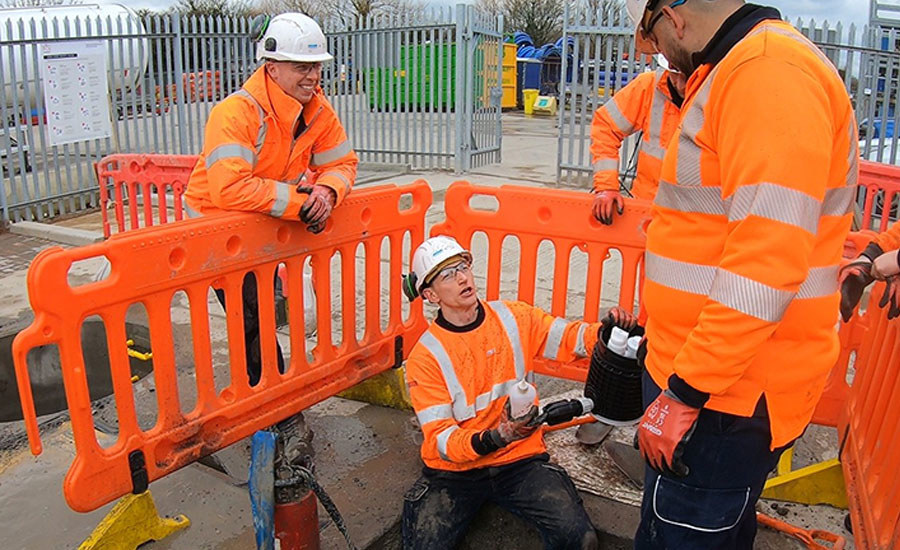
Sector Entry was established in response to a priority identified by members through the CEO Council: creating clearer routes into entrant roles. Early pilots with DWP and a small group of members have supported 18 of 21 unemployed participants into employment, an 86% employment outcome. The next step is to test the model at greater scale, connecting more people with real vacancies and helping employers access a broader pool of work-ready talent.

Apprenticeships: funding, levy reform and clear evidence
Apprenticeships remain central to workforce development across energy, water, waste and critical infrastructure. Our response on apprenticeship funding and Growth and Skills Levy reforms, helped employers understand the potential implications of emerging policy developments. Evidence submitted to the All-Party Parliamentary Group inquiry into apprenticeships, directly reflects the EUSP CEO Council’s agreed priorities and June 2026 discussion points, ensuring members’ collective position is consistently represented in national policy debate.

Responding to Technical Education and Growth and Skills Levy Announcements
Recent Government announcements on technical education and additional Growth and Skills Levy measures create an opportunity to widen access, strengthen apprenticeship pathways and build the future workforce needed across energy, water, waste and recycling. Commitments to support eligible under-25s and smaller businesses recruiting young apprentices are particularly relevant to members seeking to increase participation and develop stronger routes into skilled employment.

Sector Workforce Platform: upcoming Invitation to Tender
With members and industry, our ambition is to better connect careers, jobs, talent and workforce development across energy, water and waste. Following an engagement and testing phase, an Invitation to Tender is planned for August for the potential development of a new sector workforce platform. The platform would build on existing assets and member insight, supporting workforce attraction, development, mobility and longer-term workforce planning.

Building strategic relationships across industry
Shared workforce and skills challenges across construction, energy and utilities create opportunities for stronger collaboration, particularly around infrastructure delivery, workforce planning and skills capacity. Engagement with senior representatives from the Construction Leadership Council is helping identify where coordinated sector influence, shared learning and practical collaboration could support national growth and infrastructure delivery.

Autumn political engagement
Engagement with the new Government is part of a wider autumn programme to ensure workforce priorities agreed by members are understood across the political spectrum. Energy & Utility Skills Group plans to attend major party conferences across the UK. If you are attending, there may be opportunities to coordinate activity, share intelligence and amplify the sector’s collective voice.
Investing in members: Energy & Utilities Careers & Jobs
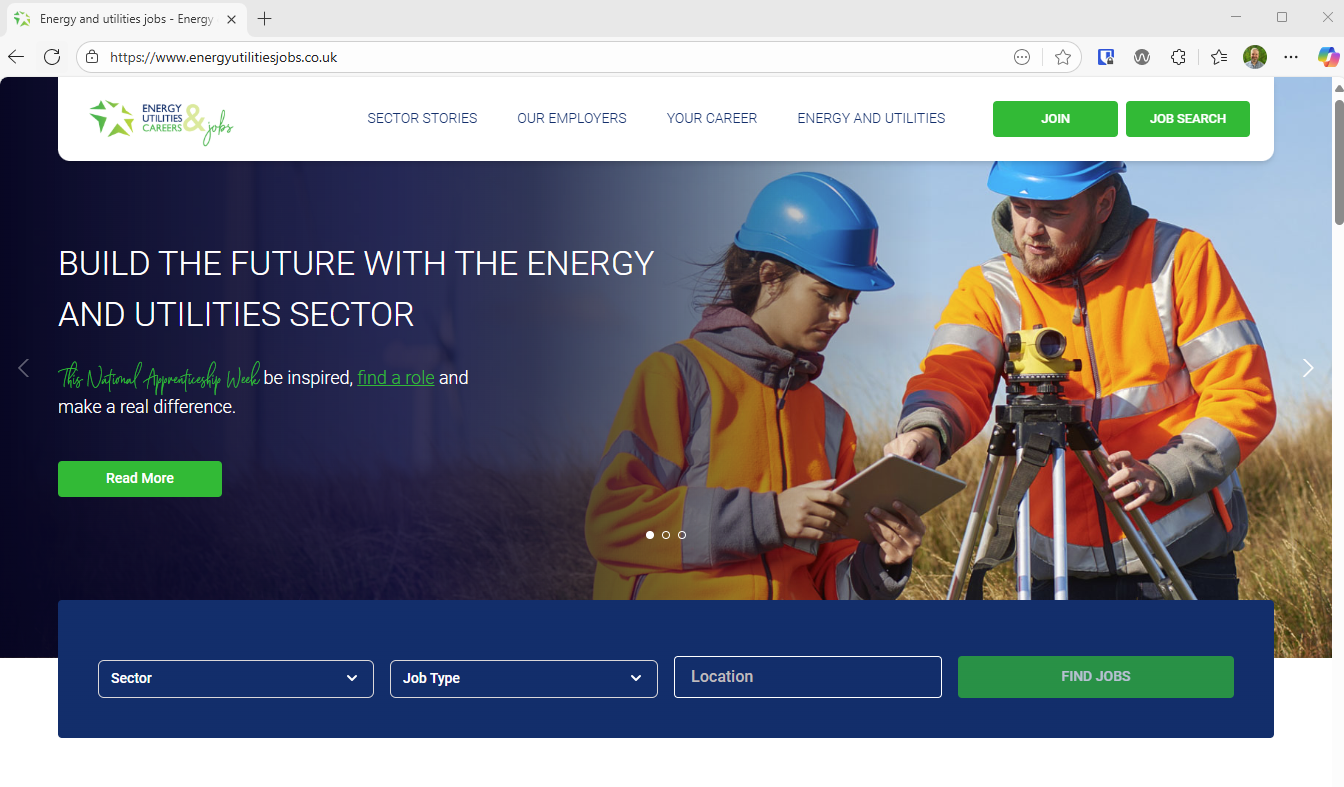
Attracting more than 40,000 new people every year to 2030 requires visible career routes, cost-effective recruitment and stronger connection between employers and candidates. Energy & Utilities Careers & Jobs is a sector asset designed to support that challenge. For 2026/27, members receive 200 job postings within membership, providing £2,000 of additional value at no extra cost. Unlimited posting has also reduced from £8,000 to £5,000, making recruitment at scale more affordable.

Strengthening our communications and policy capability
Strengthened communications and policy capability will help increase the reach of member evidence, sector priorities and collective impact. We are pleased to introduce Jade Uko, Head of Corporate Communications, and Poppy Payton, Corporate Communications Executive, who will focus on communicating evidence, policy priorities, member activity and impact with greater speed, clarity and reach.
Every update included here is rooted in the priorities identified by members through the Skills Strategy 2025-2030. Together, this activity demonstrates how employer evidence is shaping policy engagement, influencing reform and supporting practical action to build the skills and workforce capability needed for energy security, infrastructure investment and sustainable economic growth.
If you would like to discuss any of this activity or share employer insight to support our ongoing work, please contact collaborate@euskills.co.uk