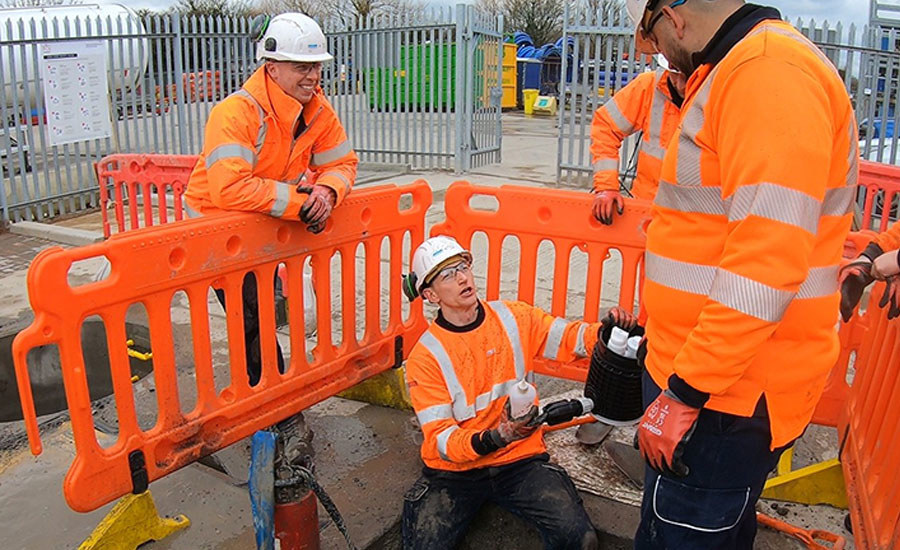
A new sector entry pilot is helping the utilities industry tackle skills shortages while supporting a more aligned and sustainable approach to workforce development.
Delivered by M Group, in partnership with Energy & Utility Skills and the Department for Work & Pensions (DWP), the initiative brings together industry and government to create high-quality routes into employment. Through tailored training, the pilot demonstrates how collaboration can deliver impact across the sector.
A coordinated response to skills challenges
The utilities sector continues to face demand for skilled workers, particularly in areas such as metering and infrastructure delivery. At the same time, many individuals remain excluded from traditional employment pathways, as they may have previously faced barriers to employment.
The pilot responds with a coordinated and practical approach, focusing on individuals not in education, employment or training, as well as those facing barriers to work. Candidates were recruited through job centres across the North and selected to take part in a four-week Domestic Meter Option (DMO) training programme linked to M Group’s Yorkshire Water contract.
Delivering clear pathways into employment
A defining feature of the pilot is its direct link between training and employment outcomes. Six of the participants who completed the programme have secured roles within M Group, demonstrating how targeted training aligned with employer demand can deliver immediate results.
Scott Findlay, Operations Manager, at M Group said:
“At M Group Water, attracting new talent into the industry is one of our biggest challenges. As we look to expand our DMO team and support Yorkshire Water’s ambitions, the DWP Sector Entry Pilot provides a practical, effective solution. Bringing in this cohort of seven new starters allows us to upskill local people and give them an opportunity to grow within the business.”
The training, delivered by specialist partner HSP, equips participants with technical knowledge and practical experience, including smart metering, water meter installation, street works safety, excavation and reinstatement. By preparing candidates for operational roles, the programme supports individual progression.
Strengthening inclusion and long-term workforce resilience
The pilot supports a more inclusive and resilient workforce by opening opportunities to individuals who may previously have faced barriers to employment. It also contributes to workforce sustainability by developing structured talent pipelines aligned to sector demand.
Collaboration driving sector-wide impact
The initiative highlights the importance of collaboration between employers, industry bodies and government in addressing workforce challenges.
Stephen Barrett, Director of Membership & Strategic Engagement at Energy & Utility Skills, said:
“This pilot shows what can be achieved when industry and government work together. By aligning training with employer demand, we are creating opportunities for individuals while addressing critical skills shortages.”
Looking ahead
With the demand for skilled workers in the utilities sector forecast to continue to grow, the ambition is for the programme to become a sector-recognised approach to training new entrants, equipping them with an understanding of the utilities sector, its health and safety requirements and the base level of skills to be work-ready.
Looking to get involved in developing the future utilities workforce? Contact the Energy & Utility Skills team to find out how you can support or benefit from similar initiatives.